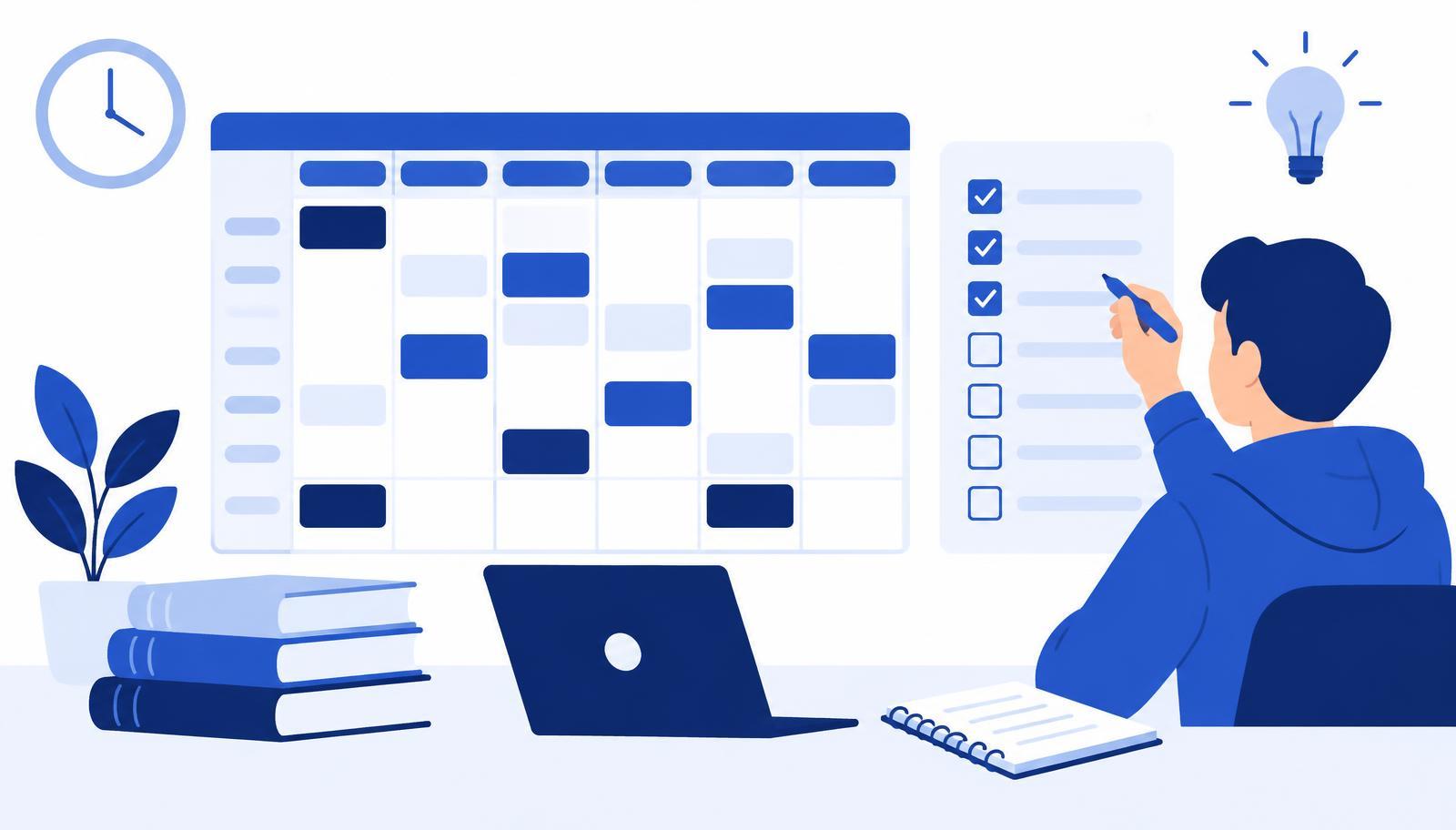

Exam season rewards preparation systems, not heroic all-nighters. The students who perform closest to their ability are usually not the ones who studied the most hours — they are the ones who spread focused effort over the weeks before, and protected their sleep during the finals.
Start from the exam, not the syllabus
Before building a revision plan, get specific about what you are preparing for: the format (essay, multiple choice, problem sets), the duration, and the topics in scope. Past papers, where available, are the most honest guide to what the exam actually looks like.
Build a backwards revision timeline
Take the exam date and work backwards. Reserve the final days for light review and practice under exam conditions — not first-time learning. Everything before that is for covering and consolidating material.
- Weeks out: cover all topics at least once, flagging weak areas.
- Halfway: focus revision time on weak areas, not comfortable ones.
- Final week: past papers, summaries, and rest — no new material after the last day or two.
Test yourself — don't just re-read
Re-reading notes feels productive and often is not. Retrieval practice — answering questions from memory, explaining topics aloud, working problems without the solution open — is one of the most consistently supported study techniques. Build it into every revision session:
- Close the notes and write down everything you remember on a topic, then check.
- Use practice questions and past papers as the main activity, not the final polish.
- Explain difficult topics to a classmate — teaching is retrieval with feedback.
Practise under real conditions
At least once per course, sit a full past paper or timed mock in exam-like conditions: no notes, timed, in one sitting. It builds speed, reveals pacing problems, and removes much of the fear of the unknown on the day itself.
Protect the fundamentals
Sleep is not lost study time — it is when memory consolidates. In the final week, consistent sleep, regular meals, and short breaks will do more for your performance than squeezing in extra late-night hours. Cramming trades tomorrow's clarity for tonight's anxiety.
Keep the plan visible
Exam preparation involves many moving parts: topics, papers, weak areas, dates. Keeping your revision plan alongside your deadlines in one place — as OneCampus is designed to do — means your energy goes into revising, not into remembering what you were supposed to revise.